You have no items in your cart. Want to get some nice things?
Go shopping
Where Literature Happens · Mallorca
What Is a Literary Festival Doing in Magaluf?
At FLEM 2026, writers, readers and a hotel are testing an unusual idea: that literature belongs wherever people gather. Eric Akoto reports from Mallorca.
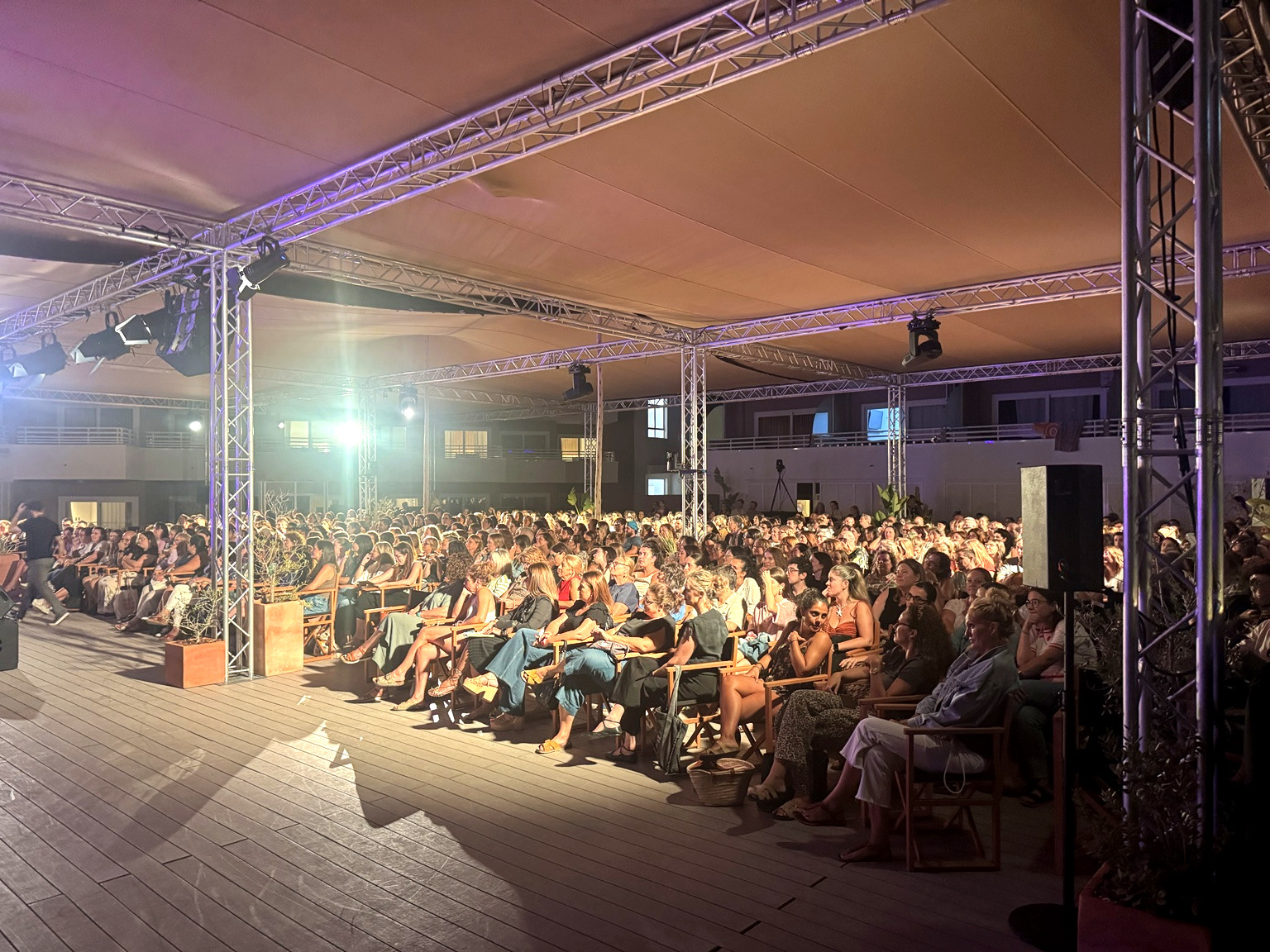
Magaluf is not the first place you would expect to find a literary festival.
For British visitors, the name has long been associated with cheap drinks, package holidays and nights that tend to end considerably later than planned. Books rarely feature in that picture. Yet, on an October evening, a crowd had gathered beneath a canopy at a hotel by the Mediterranean, waiting to hear writers speak.
There were rows of wooden chairs, stage lighting, a bookstall and a temporary stage furnished with white sofas. Beyond the festival infrastructure were palm trees, hotel buildings and the sea. The event had none of the architectural grandeur of an established literary festival. That was part of what made it interesting.
At FLEM -Festival de Literatura Expandida de Magaluf – the organisers were putting books into a setting more readily associated with holidays than literary conversation.
The question was whether that apparent contradiction was the festival’s novelty, or its real purpose.
A festival without the usual boundaries
FLEM brings together the Palma bookshop Rata Corner and the hospitality group behind the INNSiDE hotel programme. It is an unusual partnership, combining the networks and relationships of bookselling with the practical infrastructure of a hotel.
During a conversation with the festival team on Saturday 3 October, I was struck by how little interest they expressed in making the event substantially larger.
That is not what one usually hears from cultural organisations. Festivals commonly measure their progress through attendance, bigger names, expanded venues and greater visibility. Here, the organisers described something rather different.
They wanted writers and readers to occupy the same environment. An author might appear on stage in the evening and be encountered over breakfast the following morning. The distance between the formal event and ordinary hotel life was deliberately reduced.
The team placed particular importance on informal encounters, returning visitors and the atmosphere created over the course of a weekend. Their ambition was not to turn FLEM into another large literary fair.
They also described an approach to programming that resisted dividing books into conventional hierarchies of prestige. Romance, thrillers and popular fiction belonged alongside works that might ordinarily receive the label literary. The programme could accommodate international successes and local writers without requiring either to justify their presence through the other’s reputation.
This is significant. Literary festivals do not merely reflect the world of books; they help decide which parts of it are visible, which writers are treated seriously and which readers feel welcome.
A festival that makes room for different kinds of reading may reveal more about contemporary literary culture than one organised solely around established prestige.
Who gets to belong?
Among the writers appearing at FLEM were American novelist Anna Todd and French author David Foenkinos; two writers whose international readerships have developed through very different routes.
Todd’s career, beginning with the online fiction platform Wattpad, raises questions about who grants a writer legitimacy. Her readers were central to her success before the traditional literary establishment could determine where her work belonged.
Foenkinos, whose books have travelled across languages and into cinema, approaches writing through another set of concerns: memory, mortality, obsession and the often unpredictable relationship between an author and an idea.
Their presence at the same festival illustrates the variety of audiences that contemporary publishing now serves.
It is easy to speak of a literary public as though it were a single community. In practice, readers arrive through different doors: a recommendation from a friend, an online platform, a bookshop, a film adaptation or a novel encountered by chance.
FLEM appears interested in leaving more of those doors open.
The Rata Corner bookstall made that ambition visible. Beneath an illuminated sign, tables were crowded with titles, their bright covers competing for attention. Here, the festival’s larger ideas became something concrete: books available to be handled, bought, discussed and taken home.
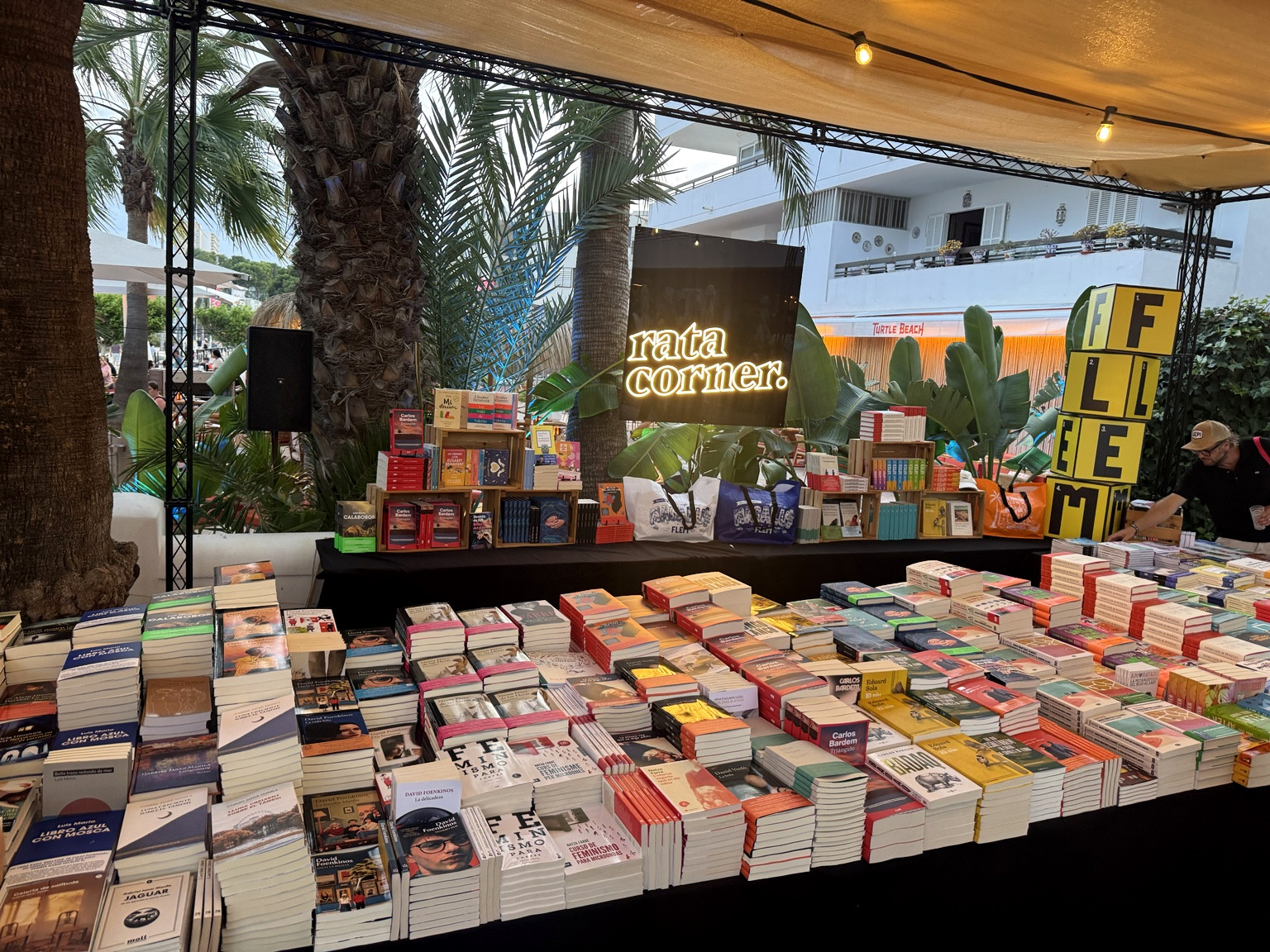
A bookshop, after all, is often where a festival’s public conversation returns to the private act of reading.
The experience of being there
The hotel setting changes the character of a literary event.
Instead of travelling to a separate auditorium, festivalgoers can move between a reading, a restaurant, their room and another conversation. FLEM uses that proximity as part of its identity, extending the programme through music and smaller encounters, including its Secret Rooms.
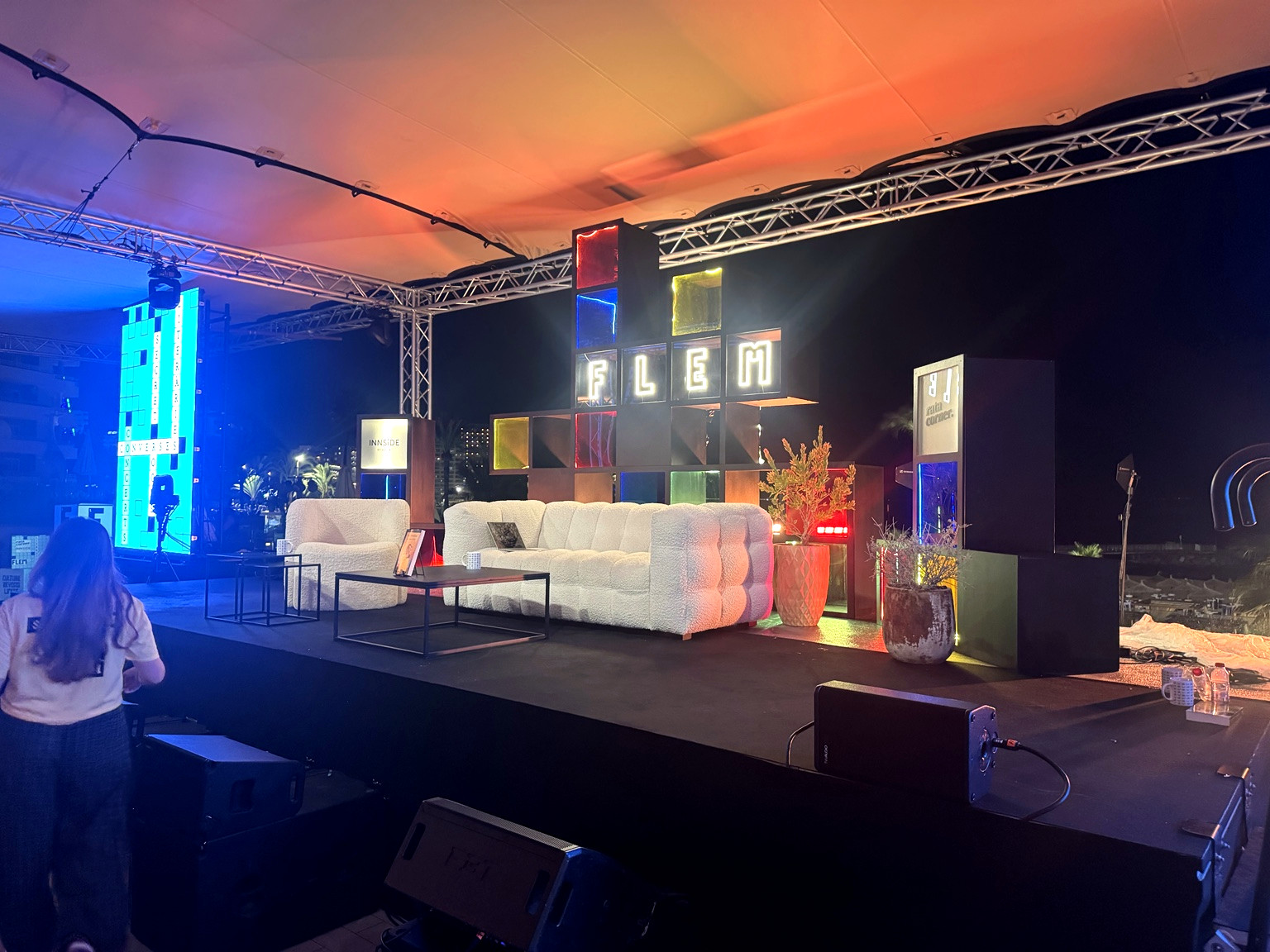
During our interview, the organisers returned repeatedly to the value of physical presence. One member of the team drew a contrast between hospitality and artificial intelligence, arguing for the importance of experiences that cannot be reduced to digital exchanges.
There is something worth exploring in that distinction.
Publishing has spent years thinking about how to reach people through screens. Readers discover books through digital recommendations, online communities and increasingly sophisticated systems for distributing attention. Some of those developments have opened literary culture to audiences that traditional institutions struggled to reach.
But the experience of sitting among other readers, hearing an author respond to an unexpected question, or carrying on a conversation after the formal programme has ended is different.
At FLEM, that difference was not treated as an incidental benefit. It was central to the organisers’ idea of what the festival should be.
The live interpreting booth offered another small but telling detail. Inside a glass-fronted enclosure, an interpreter worked with a headset and microphone while conversations took place on stage.
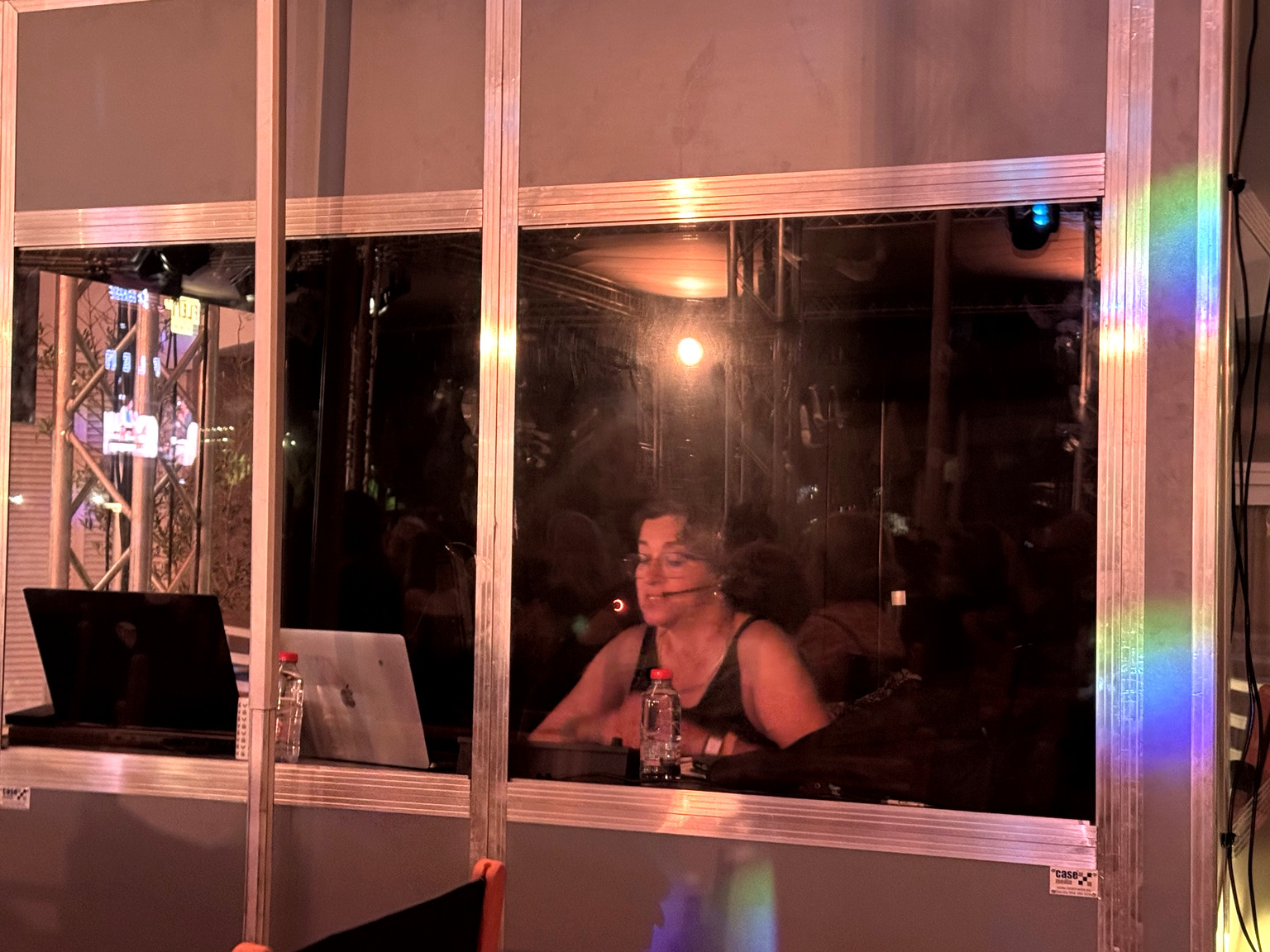
International literary exchange is often discussed in terms of rights sales, translations and global publishing markets. Here was some of its less glamorous but essential labour: a person helping an audience follow a conversation across languages as it happened.
Changing the conversation about Magaluf
None of this takes place in a neutral setting.
Magaluf has a reputation that precedes it. That reputation is not imaginary, and it cannot be rewritten simply by hosting a weekend of literary conversations.
During the press visit, local representatives spoke about efforts to encourage more responsible tourism, attract families and expand the area’s cultural activities. They also acknowledged continuing difficulties associated with alcohol-related behaviour and pressure on local housing.
The tension matters. A destination cannot be understood only through what it wants visitors to see.
It would be too easy to use FLEM as evidence that Magaluf has successfully reinvented itself. A literary festival does not resolve the economic and social pressures created by tourism, nor does a cultural programme automatically change who benefits from the visitor economy.
The organisers themselves resisted describing the festival as a solution to a problem. They presented it instead as an additional experience, one that could bring local residents, visitors and writers together.
That distinction is more credible than the familiar story of a troubled resort redeemed by culture.
Foenkinos, speaking during a group interview, offered a useful way of thinking about the location. He was interested in the idea of bringing culture to places where people already gather rather than expecting audiences to travel towards traditional cultural centres.
He also noted the visible enthusiasm of festivalgoers. Recognisable names alone, he suggested, do not guarantee an audience.
Looking across the rows of people gathered for the programme, it was difficult to dismiss that enthusiasm as simply a product of the setting.
What happens next?
FLEM’s most interesting proposition may not be that Magaluf can host writers. There is no obvious reason why it could not.
The more important question is what happens when literary organisers begin with the lives, interests and existing habits of potential readers, instead of expecting those readers to conform to the conventions of literary culture.
There are risks in making literature part of a hospitality experience. A festival can become another amenity, another reason to book a room, another attractive image in a destination’s promotional material.
But cultural activity can also acquire significance beyond the intentions of its organisers. A reader encounters an unfamiliar writer. A local resident enters a space previously associated mainly with tourists. A conversation continues after the audience has left the stage.
Those outcomes are harder to measure than attendance.
For FLEM, the challenge will be to preserve the intimacy its organisers value while demonstrating that the festival belongs to more than the hotel and its guests.
On the evidence of this year’s gathering, there is an audience willing to participate.
What remains to be seen is how far that relationship can grow without losing the qualities that brought people together in the first place.
Eric Akoto attended FLEM 2026 in Magaluf, Mallorca, as part of an organised press trip. This article forms part of Where Literature Happens, Litro’s October 2026 series of international literary and cultural reporting.
Continue reading
What Comes After Visibility?
Bernardine Evaristo, Margaret Busby and the institutions Black British literature still needs — from Litro’s Arts & Culture pages.