Sensuality in the Short Story
This four-week online writing workshop will give students the skills to confidently incorporate sex and sensuality into their writing.
About the course
Course Fee
:
Course Dates
Saturday, September 7th 2024
Saturday, September 14th 2024
Saturday, September 21st 2024
Saturday, September 28th 2024
All Sessions Will Run 4PM-5PM CET
Course Length
4 weeks
Weekly Study
1 hour
Testimonial
Katie Lodge
“Cat’s workshops are brilliant. They’re personal. They’re not like other workshops I’ve been to where you feel a bit like a number. It’s personal because she cares, she invests in people. She listens, she reads, she wants to know what kind of writer you are.”
Course summary
Why are some writers so original and alluring? Why does other sex writing make us cringe? How can your writing achieve balance and sensuality that engages the reader? Join Catherine McNamara for a masterclass series that will develop your voice through stimulating in-class exercises, critiquing of your work, and the development of a submission-worthy story. You will study style and technique of contemporary greats and saucy classics.
This four-week course will guide beginner and intermediate writers through the process of writing sex and sensuality. From overcoming the fears that keep us from putting sexuality into our writing, all the way to submission tactics, this online writing workshop will give you confidence to develop a successful draft.
How you will learn
Our team of editors, novelists and scriptwriters will provide a helping hand – making you a more confident writer.
Thanks to our status as a platform for discovering the best literary talent – having helped kick-start the careers of several literary writers to acclaim, such as Nikesh Shukla, Naomi Alderman, Peng Shepherd, Clare Wigfall, Stuart Evers, Inua Ellams and others on the Man Booker Prize longlists – we have far-reaching external networks that create opportunities for your work to get in front of editors, agents and publishers. You will learn through:
- Generating and pitching ideas
- Submissions best practices and feedback
- Live readings & performances
- Writing and sharing your work online
- Specialist workshops
- Live salons
The Tutor
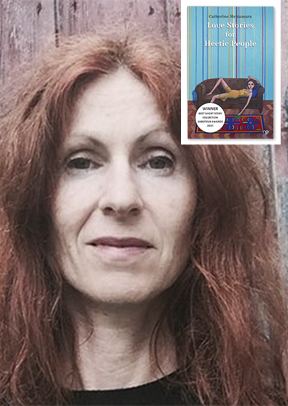
Catherine McNamara
Catherine McNamara grew up in Sydney, ran away to Paris to write, and ended up in West Africa running a bar. She was an embassy secretary in pre-war Mogadishu, and has worked as an au pair, graphic designer, gallery manager, teacher, translator and shoe model. Praised by Hilary Mantel, her short story collection The Cartography of Others was published in May 2018, and was recently awarded Grand Prize in the Eyelands International Book Awards (Greece) and listed on the Literary Sofa’s Best of 2018 Reads. Her book Pelt and Other Stories (2013) was long-listed for the Frank O’Connor Award and semi-finalist in the Hudson Prize. Her short stories and flash fiction have been Pushcart-nominated and published widely in the U.K., Europe, U.S.A. and Australia. Catherine speaks Italian and French and lives in Veneto, Italy, where she hosts retreats for writers in her African-art-filled farmhouse.
Thank you so much! I need a kick in the butt writing as I have terrible writer's block and feel better already after your class-you are a great teacher and I feel inspired to explore flash and get my
voice out there. Thanks - Student
A concoction of professionalism and eccentricity, Cat is essential for any writer trying to work out their own writing. During her stimulating course with Litro, she kicks open the garden gate to the imagination and lets it swing. - Student
Cat offered her professional experience and ideas generously while encouraging participants to share work and give feedback. The supplementary materials - reading lists and writing prompts - sparked some great discussions. Her instruction style is warm and encouraging and I found the content of the course engaging. I am looking forward to taking another Masterclass from Cat in the future. - Student