You have no items in your cart. Want to get some nice things?
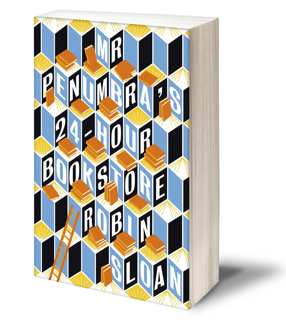
Go shoppingRobin Sloan, author of Litro’s current Book Club pick, the fantastic Mr Penumbra’s 24-Hour Bookstore, tells us how the idea for the novel came from a tweet.
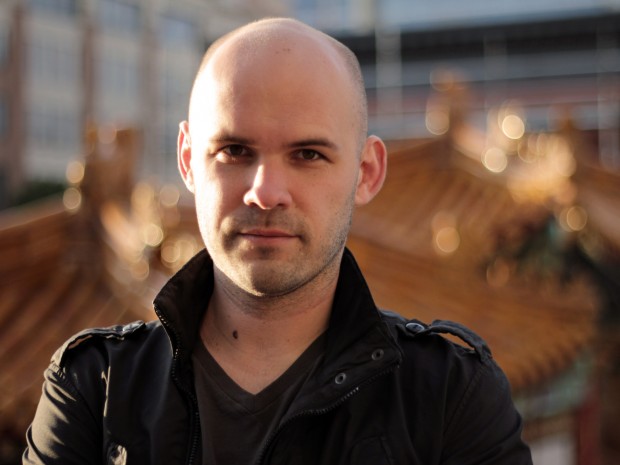
Litro: Tell us about Mr Penumbra’s 24-Hour Bookstore – what’s the book about?
Robin: It’s an adventure and a mystery set mostly in San Francisco. The story begins when an unemployed designer gets a job working the night shift at a mysterious bookstore that is, needless to say, much more than it appears to be.
Litro: Where did the idea for the book come from?
Robin: The seed of the idea came from a tweet! Years ago, a friend tweeted: “just misread ’24hr bookdrop’ as ’24hr bookshop’. the disappointment is beyond words.” It made me laugh, and like many writers, I am a keeper of scraps—a scribbler of notes—so I copied it down. Then, months later, when I sat down to begin a new short story, I encountered it again, and it seemed to me that a 24-hour bookstore would be a pretty great setting for a story. So, I started writing. The scrap grew into a short story, and the short story into a full-length novel.
Litro: What do you hope people will take away from the book?
Robin: I don’t want to say too much about that, because I think it spoils some of the surprises. I will say that there’s a lot in this novel about the relationship between books and technology, and I hope people emerge a bit more optimistic on that front.
Litro: Tell us about the process of writing Mr Penumbra – how long have you been working on it? Did you know where the plot was going before you started?
Robin: The first draft took about a year, during which I also had a full-time job, working at Twitter here in San Francisco. I didn’t have the whole plotted out precisely, but I did have a sense of what was waiting at the end—the secrets that I wanted to reveal.
Litro: There are a lot of “secret societies” in the novel – the Unbroken Spine, the Google corporation, Grumble’s forum, the Accession Table – what interests you about these closed worlds?
Robin: I’m glad you picked up on that! I like writing about secret societies because I think they are, in fact, quite common. Most offices are little secret societies with their own strange hierarchies, right?—their own little rituals. I think families have those characteristics, too. Relationships certainly do. And so, I think dialing up the strangeness a bit—adding secret passwords, dark robes—actually helps us see these everyday cults a bit more clearly.
Litro: You’ve got a fantastic female character in Kat – where did the inspiration for her come from?
Robin: Kat is probably my favourite character in the novel, and the inspiration for her was very direct: I have, over the years, worked with many brilliant, ambitious women who were engineers and managers, and yet, reading fiction, I didn’t see them represented. Like—nowhere! I couldn’t believe it; still can’t, really. Kat is my small contribution toward balancing the scales and giving these bad-ass women their due on the page.
Litro: What kind of things were you reading while you were writing Mr Penumbra?
Robin: In general, I’m a huge fan of science fiction, and I think I was probably reading even more of than usual while I was writing Penumbra. I think you can see that in the story: it’s packed with SF homage, shot through with references and asides. All in all, I have to say SF is my favorite genre—my favourite shelf in the bookstore.
Litro: The book focuses on the relationship between “old” print media and new technology – what do you think the future holds for the printed book?
Robin: I think the printed book is going to be around for a long time to come. It’s a finely-honed format with lots of very attractive features; that sort of thing doesn’t disappear overnight. Now, there’s no question we’ll see more mixed collections, more hybrid reading—but that hybridity will, for a long time, include a healthy print component.
Litro: Is technology changing the way we read?
Robin: Well, I think it’s giving us new ways to read. There’s no question: the experiences of reading on a phone, a tablet, an e-reader, a laptop, and a printed book are all different. It has as much to do with our bodies as the screens themselves: what’s our posture like? Are we curled up? Where are we reading—on a train, under a tree, in bed? “Reading” is not just one thing, and right now we’re seeing a sort of Cambrian explosion of different kinds and contexts. That’s nothing but exciting.
Litro: What was the first book you ever loved, and why?
Robin: That’s hard to remember, but I can tell you that among them were the Chronicles of Prydain, the classic fantasy adventure series by Lloyd Alexander. I remember finishing the last book in the series—the pages dwindling beneath my fingers—and feeling this rising sadness, this great melancholy, because my time with the characters was coming to a close. For me, that’s still the purest expression of love for a book: the sadness when it’s over.
Litro: Tell us about the first time you realised that the world may not be as it seems.
Robin: This might sound strange, but I honestly think it was in my economics classes at Michigan State University. I had, of course, read about magic systems in fantasy novels for years and years prior to that point; but in those classes it seemed that I was encountering a real system of magic for the first time. I’ve become more skeptical of the discipline’s power in the years since, but I still remember that feeling vividly: like someone was lifting up the skin of the world, showing me the muscle and bone underneath.
Litro: What do you do when you’re not reading or writing?
I spend a lot of time working with computers—tinkering, programming, inventing. I’ve released a few digital experiments (I made an iPhone app called Fish, for example—a sort of touchscreen essay) and there are more to come.
Litro: What has been the most formative place in your life? Why?
Robin: Is the internet a place? I think so. I often think of the Web in particular as a sort of big, weird, sprawling city. I feel lucky to have wandered in relatively early and seen it grow and change.
Litro: What are you working on next?
Robin: There’s a prequel to Penumbra coming out in the fall, a digital short. It tells the tale of Mr. Penumbra’s arrival in San Francisco in the year 1969 how he first encountered this strange 24-hour bookstore, and why he decided to stay.
Read the book? Tell us what you think on the Book Club discussion page.

About Emily Cleaver
Emily Cleaver is Litro's Online Editor. She is passionate about short stories and writes, reads and reviews them. Her own stories have been published in the London Lies anthology from Arachne Press, Paraxis, .Cent, The Mechanics’ Institute Review, One Eye Grey, and Smoke magazines, performed to audiences at Liars League, Stand Up Tragedy, WritLOUD, Tales of the Decongested and Spark London and broadcasted on Resonance FM and Pagan Radio. As a former manager of one of London’s oldest second-hand bookshops, she also blogs about old and obscure books. You can read her tiny true dramas about working in a secondhand bookshop at smallplays.com and see more of her writing at emilycleaver.net.